
Regional cooperation strengthened at the fourth session of the Buenos Aires Recognition Convention Committee and the CINALC network in Montevideo
Meeting led by UNESCO IESALC advances fair recognition of qualifications and boosts cooperation to implement the Convention, helping ensure equal opportunities for all
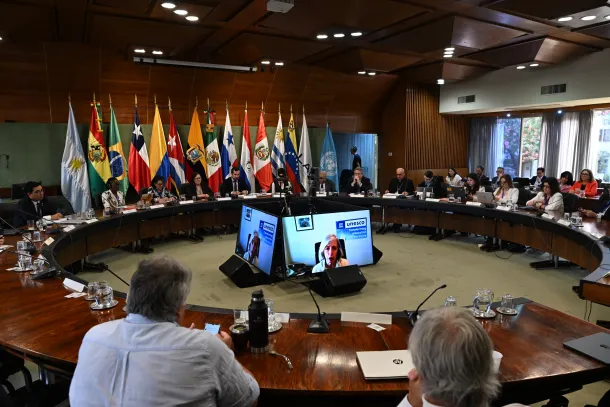
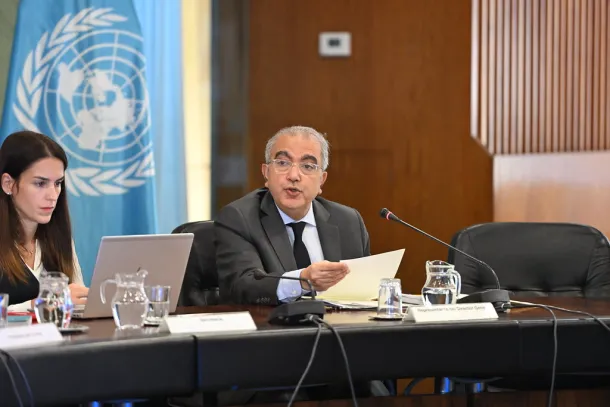
On 24–25 February 2026, representatives from 20 Member States across Latin America and the Caribbean, as well as international organizations and other institutions, gathered in Montevideo, Uruguay, for the fourth session of the Committee of the Buenos Aires Recognition Convention, alongside a full meeting of the Regional Network of National Information Centres (CINALC).
Organized by UNESCO IESALC in cooperation with the Ministry of Education and Culture of Uruguay, the two-day programme marked a pivotal step in strengthening regional cooperation on the recognition of higher education qualifications and advancing the implementation of the Buenos Aires Recognition Convention.
Adopted in 2019 and in force since 2022, the Convention aims to ensure fair, transparent, and nondiscriminatory recognition practices, promoting academic mobility and regional higher education harmonization. With six ratifications to date and several countries progressing toward accession, the Convention continues to gain traction as a framework for harmonizing recognition systems in the region.
Out of 31 million students in Latin America and the Caribbean, just under half a million pursue their studies outside their home countries. While the region has one of the lowest mobility rates in the world, it has witnessed increased inter-regional mobility, rising from 24% to 43% over the past two decades.
CINALC session: strengthening operational cooperation
The programme opened on 24 February with a full morning dedicated to CINALC, the operational arm of the Convention. Since its launch in February 2024, CINALC has brought together 17 national recognition authorities to exchange information, share best practices, and collaborate on regional tools.
UNESCO Montevideo
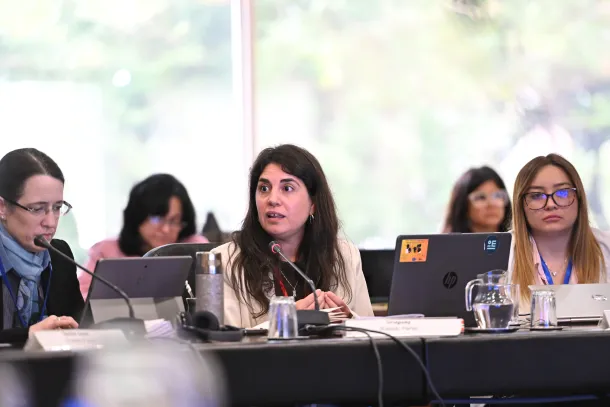
This fourth session of the Regional Committee of the Buenos Aires Convention is a unique opportunity to strengthen the integration of the countries in the CINALC network and to advance in the recognition of qualifications, academic mobility and the full integration of people in their countries of origin.
Virginia VillalbaElected President of the Convention Committee
Key discussions included:
- Progress on the Recognition Manual for Latin America and the Caribbean, designed to facilitate the implementation of the Convention.
- A review of the state of ratifications and the advisory role of CINALC in supporting countries toward accession.
- Updates on the CINALC digital platform, part of Campus IESALC, designed to facilitate regional information exchange.
- Agreement on the 2026 CINALC workplan, focusing on information exchange, capacity development and guidance.
The CINALC coordination group was also elected, including Cuba, Granada, Peru and Uruguay.
Joint workshops: tackling emerging challenges
In the afternoon, Committee members and CINALC representatives engaged in three thematic workshops addressing the most pressing issues in the regional recognition ecosystem:
- Education fraud and artificial intelligence, exploring new risks and opportunities brought by AI in credential assessment, led by Luca Lantero, Director General of the Academic Equivalence Mobility Information Centre (CIMEA) in Italy.
- Diploma Supplement implementation, analysing feasibility, benefits, and lessons from national experiences, led by Carla Brufau, Legal Adviser for the Higher Education Area at the Ministry of Education and Culture of Uruguay
- Microcredentials practices, discussing emerging regional frameworks and institutional innovations, led by Jorge Alfonso Rodríguez Tort, Director in Educational Innovation at the Tecnologico de Monterrey in Mexico
Committee session: reviewing progress and setting the 2026 agenda
On 25 February, the Committee held its formal session, opening with highlevel participation from the UNESCO education leadership – Stefania Giannini, Assistant Director-General for Education and Borhene Chakroun, Interim Director of UNESCO IESALC – Gabriela Verde, Vice Minister for Education and Culture (Uruguay) and Gonzalo Baroni, President of the Convention Committee.
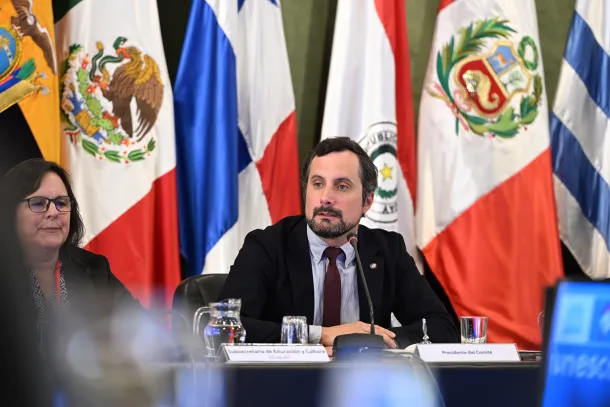
We are deciding on the future, the work plan: what we are going to do and what we have done. This is important for mutual trust between countries, for the mobility of people and for the possibility of personal development.
Gonzalo BaroniOutgoing President of the Convention Committee
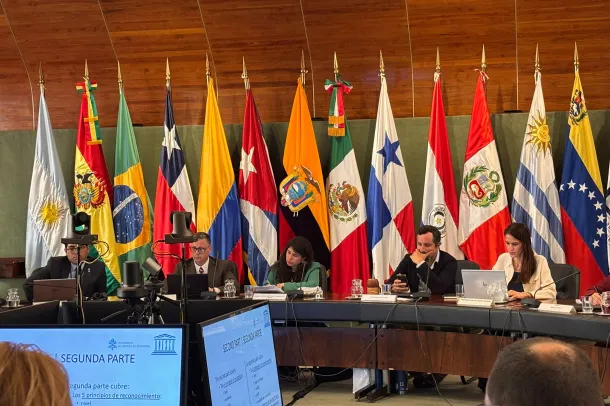
The agenda covered several core regional priorities:
- Mapping the recognition of qualifications for refugees and displaced persons, including perspectives from UNHCR and national experiences from Colombia.
- Academic credits and transfer systems, with findings of a regional mapping and Costa Rica’s national experience.
- Examination of the regional framework for minimum standards on microcredentials, also featuring experiences from Jamaica and New Zealand.
- Information on the Global Convention on the Recognition of Qualifications concerning Higher Education and its relevance for the region.
- Adoption of the 2026 Committee workplan, focusing on accelerating ratifications, developing thematic guidance and tools to facilitate the implementation of the Convention and inter-regional and global cooperation.
Election of the Committee Bureau, that included: Virginia Villalba of Uruguay in her personal capacity, Deysi Fraga (CUBA) as Vice-President, and Luis Jesús Rodríguez Gómez (Perú) as Rapporteur.
UNESCO IESALC expressed its appreciation to the outgoing Bureau members, Gonzalo Baroni of Uruguay, Dhana McQuilkin of Grenada, and Denise Pereira from Cuba, for their leadership and valuable contributions during their tenure in the last three years.
Next steps
The session concluded with agreement on follow-up actions and a commitment to continue building coordinated, transparent, and student-centered recognition systems that can facilitate mobility across Latin America and the Caribbean. The next session of the Convention Committee will be held within the next two years, in line with the provisions of the Convention, while CINALC will convene for its annual session at the beginning of 2027.
We are progressing dialogue and collaboration to advance with the implementation and ratification of the Conventions, both regionally and globally. UNESCO IESALC is mobilized to continue the work and make these conventions a reality for every student.
Borhene ChakrounInterim Director, UNESCO IESALC